NVIDIA Ships a Humanoid Reasoning Model, SageMaker Drops S3 Entirely, and the Week Infrastructure Became Invisible
Slow news week. Most of the noise was point releases and minor feature flags, but three things stood out: NVIDIA shipped a reasoning model for humanoid robots, AWS finally let you skip S3 uploads for async inference, and Cloudflare hit 12 years of free security for journalists and activists. Not flashy, but the kind of infrastructure work that quietly changes what's possible.
NVIDIA's humanoid robot now reasons through tasks
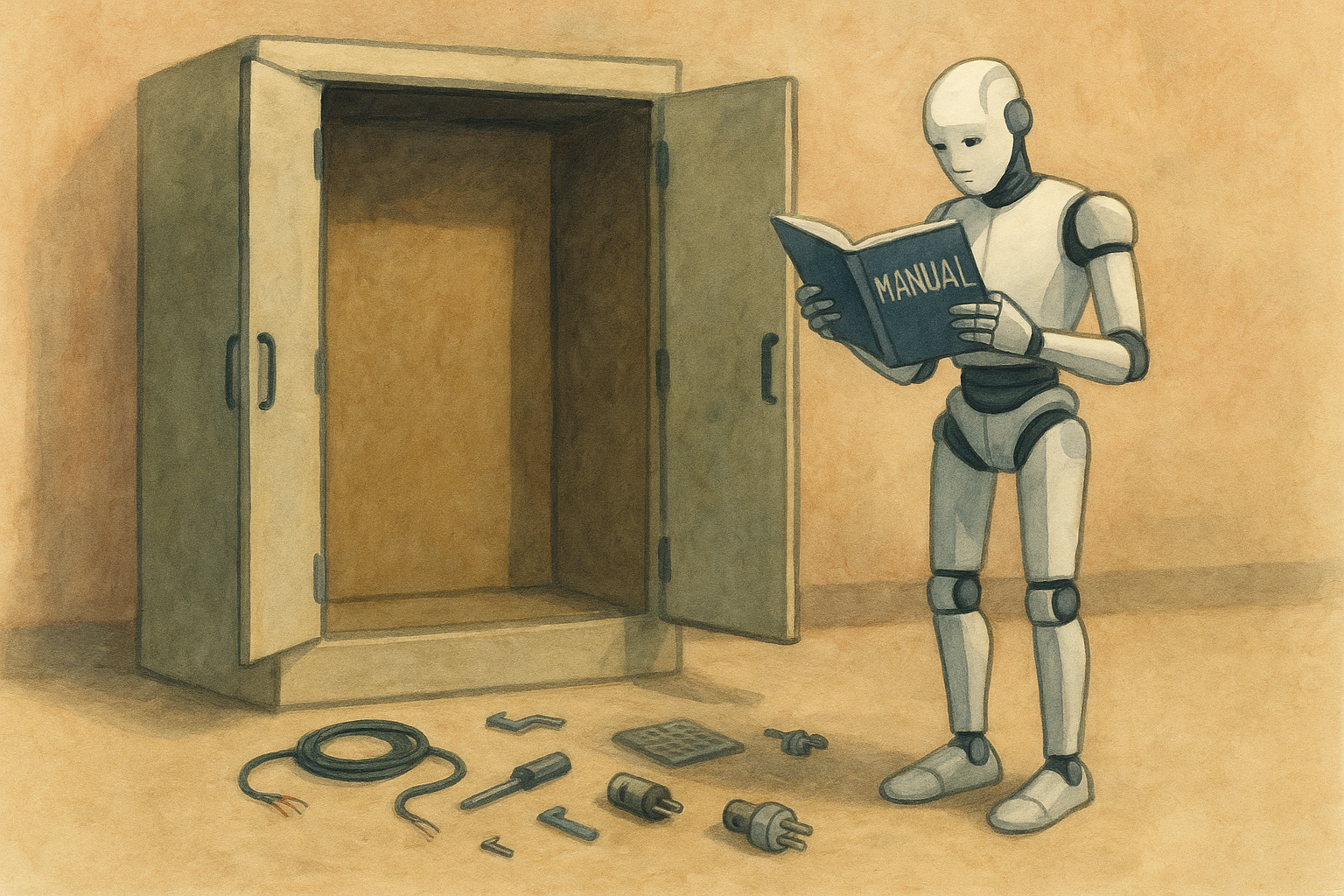
NVIDIA quietly dropped Isaac GR00T N1.7, an open reasoning model built specifically for humanoid robots. This isn't another chatbot wrapper—it's a vision-language-action (VLA) model designed to handle physical manipulation tasks where the robot needs to think through multi-step problems in real time.
The "reasoning" label here matters. Early humanoid systems were mostly vibes-based: pre-trained on massive datasets, decent at mimicking human motion, terrible at adapting when something goes wrong. GR00T N1.7 adds a planning layer—think chain-of-thought for robotic arms. If the object moved, the lighting changed, or the task sequence got interrupted, the model can re-route instead of just failing.
NVIDIA also shipped healthcare robotics models alongside it. Not a coincidence. The use case is narrow but real: hospitals need robots that can operate in messy, dynamic environments where pre-programmed scripts break immediately. A reasoning model that can handle edge cases without a software update is the difference between "cool demo" and "deployable product."
Still early. But if you're building embodied AI, this is the stack you'll be evaluating.
AWS killed the S3 upload step for async inference
SageMaker Async Inference now supports inline payloads up to 128,000 bytes. Before this, every async request required uploading your input to S3, then passing a pointer to SageMaker. Now you can send the payload directly in the API call body—no intermediate storage, no pre-signed URLs, no S3 lifecycle rules to debug when something times out.
This removes an entire network hop. For batch inference workflows—think document processing, image classification at scale, anything latency-tolerant but annoying to orchestrate—you just saved yourself two API calls and a potential failure mode.
The 128 KB limit is real but reasonable. Most text payloads fit comfortably; images and audio usually don't. If you're already writing S3 upload logic for larger files, nothing changes. But for the 80% of async inference that's JSON blobs under 100 KB, this is one less thing to think about.
AWS is in the business of making infrastructure disappear. This is that.
Cloudflare's free DDoS protection turns 12
Project Galileo hit its 12th birthday. For context: Cloudflare gives free DDoS protection, CDN, and security services to journalists, human rights groups, election sites, and other high-risk targets who can't afford enterprise contracts. Over 3,200 organizations are covered now.
Not glamorous. Doesn't ship with a launch video. But it matters more than half the products that cross this blog. When a newsroom in a hostile country gets hit with a state-level attack, they don't have time to negotiate a contract or spin up Terraform. They need it to just work, immediately, for free.
Cloudflare has kept this running for over a decade without making it a growth marketing gimmick. That's rare. Most corporate "social good" programs are press releases that die after year two. This one scaled.
If you're building infrastructure, this is the model: solve a real problem for people who can't pay, do it well enough that it becomes load-bearing, and keep it running when the hype cycle moves on.
The boring stuff compounds
None of this week's updates will make a demo reel. NVIDIA's humanoid reasoning model won't be in production for at least another year. The SageMaker change saves you maybe 30 lines of boto3 code. Cloudflare's milestone is just "we kept doing the thing we said we'd do."
But this is how real infrastructure gets built. You remove one unnecessary step, add one reasoning layer, protect one newsroom at a time. Over a long enough timeline, the boring stuff is what survives.
The flashy pivots and nine-figure seed rounds will dominate next week's headlines. But the work that actually compounds—eliminating S3 uploads, open-sourcing robot models, keeping DDoS protection free for people who need it—doesn't need a PR team. It just needs to keep shipping.